 Water
Water How to Install a Camper Van Water System Using PEX-A Uponor Fittings
A step-by-step guide to building a reliable camper van water system with cold and hot water, gray tank, and shower hose using PEX-A Uponor fittings.

The three essential camper van water system components — fresh water tank, water pump, and gray water tank — and how to choose and size each one.
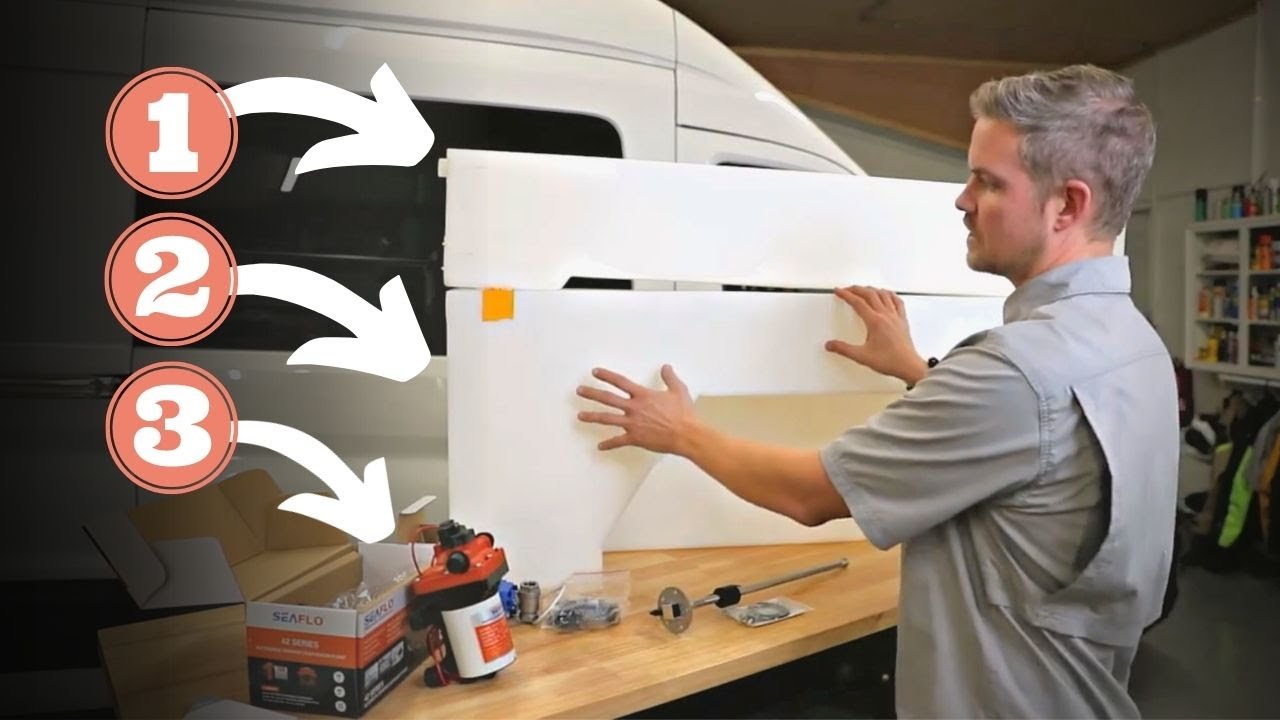
Designing a reliable and efficient water system is one of the most important aspects of a DIY camper van build. In this guide, we'll break down the three essential water system components you'll need: the fresh water tank, water pump, and gray water tank. Whether you're building an off-grid weekend warrior or a full-time adventure rig, understanding these elements is key to creating a functional and dependable water setup.
A 40-gallon tank weighs about 333 lbs when full (at 8.34 lbs per gallon), so weight distribution is important. Placing it over or near the rear axle can help keep the load balanced, especially if your power system is on the opposite side of the van.
Tip: If unsure, size up—extra capacity means more flexibility.
✅ DIY Tip: Add a blue LED behind a panel cutout to create a simple, effective tank level visual indicator—no electronics or gauges required.
The pump is the heart of your water system. A 12V diaphragm pump like the Seaflo 42-Series is recommended for its reliability, pressure control, and quiet operation.
Not always. Some pumps, like the Seaflo 42-Series, are pressure-sensitive and modulate themselves, eliminating the need for a separate accumulator to prevent surging.
Install a mesh strainer between the tank and pump to catch any debris or sediment before it can damage your system.
Gray water is wastewater from your sink or shower. It's separate from black water (toilet waste) and usually simpler to manage.
Sites like Plastic-Mart.com let you sort tanks by gallon size, dimensions, and fitting location—perfect for fitting your van's undercarriage.
If the tank is mounted close to the van floor:
Use a carbon-based RV water filter inline with your fill hose to remove sediment and bad taste. This protects your tank, pump, and overall water quality.
If you plan to drink directly from your van's faucet, consider:
Many vanlifers simply carry separate filtered water in bottles for drinking.
Most van builds use a portable toilet (like Thetford or Dometic models) rather than a built-in black water tank. These are compact, easy to empty, and more practical for camper vans.
For minimal builds:
💡 Pro Tip: If you're using a small system like this, ensure your drain fittings are larger (¾" or more) to prevent slow draining.
Building a camper van water system takes planning—but once installed, it adds a huge level of comfort and independence to your travels. Whether you go simple or advanced, make sure to:
Need help designing your water system? Check out more guides, tutorials, and parts recommendations at VanBuilderHQ.com—your go-to resource for van conversion tips.
Water A step-by-step guide to building a reliable camper van water system with cold and hot water, gray tank, and shower hose using PEX-A Uponor fittings.
 Water
Water A real-world PEX-A water system layout for a Ford Transit, showing how each part connects from tank to pump, water heater, faucet, and mixer valve.
 Water
Water A step-by-step guide to sanitizing your camper water tank with bleach, including how often to clean it, signs it needs cleaning, and a bleach-free alternative.
 Gear Reviews
 A review of the best DIY campervan conversion kits, with help choosing the right one for your vehicle, layout, budget, and build experience.